
A new round of traffic-safety data is changing how Miami crash victims should think about truck-accident claims. In April 2025, the National Highway Traffic Safety Administration estimated 39,345 traffic fatalities nationwide for 2024 and described the fatality rate as the lowest since 2019. That matters in Miami, Florida, where a collision involving a commercial truck on corridors like the Palmetto Expressway can still produce catastrophic injuries, complex liability disputes, and fierce arguments over claim value. For injured drivers, passengers, cyclists, and families, the real question is how those trends intersect with fault, evidence, insurance, and the average semi truck accident settlement in a real Florida case.
Why the new traffic data matters under Florida law
National safety improvements do not reduce the legal complexity of a Miami semi-truck injury claim. NHTSA’s April 8, 2025 release projected 39,345 traffic deaths in 2024, but that encouraging headline does not erase the fact that crashes involving large commercial vehicles still cause outsized harm because of vehicle weight, stopping distance, and roadway speed. In Florida, a victim’s financial recovery turns on case-specific proof of negligence, causation, and damages, not national averages. NHTSA’s 2024 fatality release provides context, not a shortcut.
Florida’s negligence framework is especially important in truck cases because insurers often spread blame across multiple drivers. Under Florida comparative fault law, damages may be reduced according to a claimant’s share of fault, and a party found more than 50% at fault may be barred from recovery. In a multi-vehicle expressway collision, the defense may argue that a victim changed lanes too late or braked suddenly, even when the truck driver or carrier created the danger.
Florida’s no-fault structure affects the early stages of a claim, but it is rarely the end of the story in a serious truck crash. Florida requires certain minimum insurance coverages, including Personal Injury Protection, and requires reporting when a crash involves injury, death, or at least $500 in property damage. Yet major truck cases usually move beyond basic PIP issues because losses often include surgeries, long-term treatment, lost earnings, and disputed future care needs. The FLHSMV crash guidance is a useful starting point for the immediate post-crash framework.
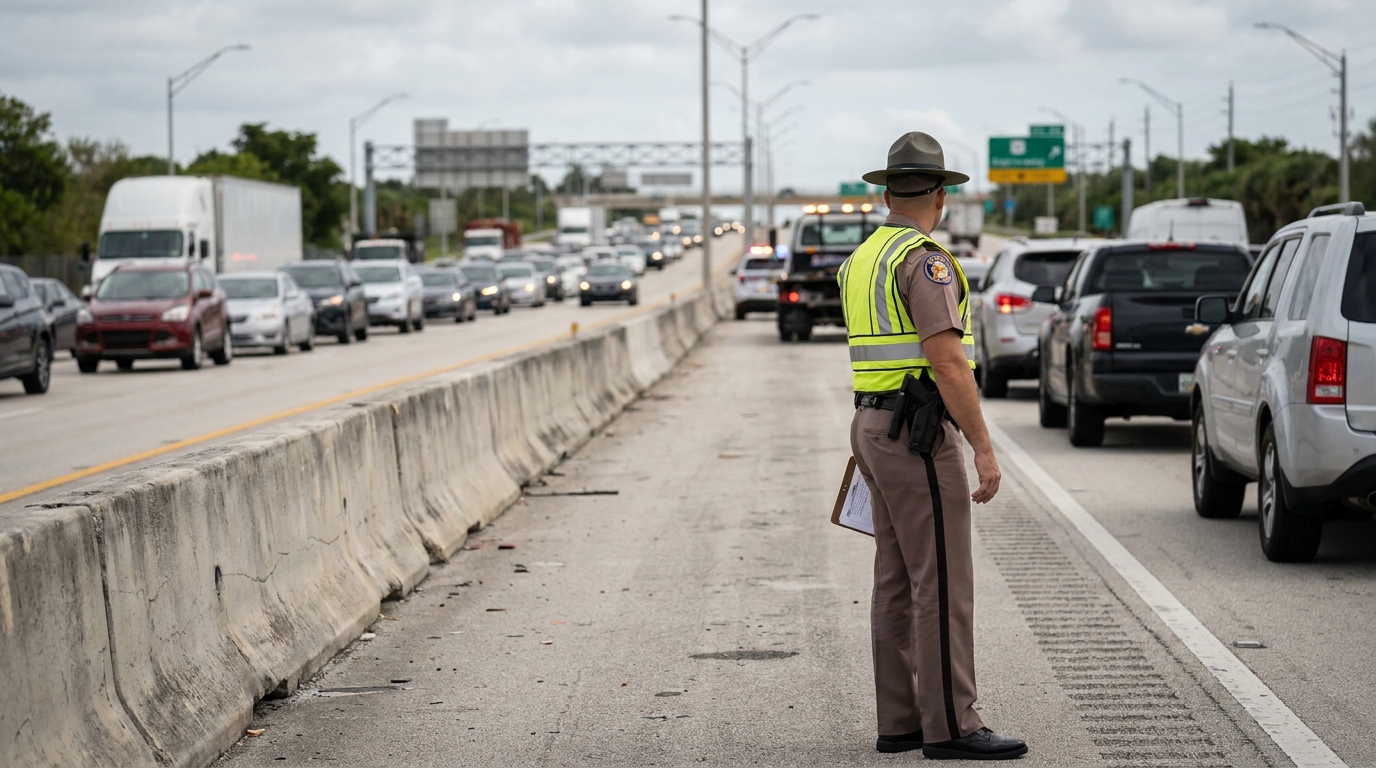
A Miami hypothetical that shows how settlement value can shift
Imagine a Miami-Dade commuter heading south on the Palmetto when a tractor-trailer plows into a line of vehicles. A 38-year-old driver suffers a cervical injury, concussion, and fractured wrist; her child in the back seat needs emergency evaluation; and within 48 hours she experiences neck pain and headaches that were not obvious at the scene. That delay is common, because whiplash symptoms can appear 24 hours or more after trauma.
Now add the legal realities that follow. The trucking company’s insurer argues she was partly responsible because she braked abruptly. Her physicians recommend imaging, therapy, and time off work, while the carrier disputes injury severity and suggests a low-speed event. Suddenly, what is the average semi truck accident settlement becomes a harder inquiry tied to fault allocation, diagnosis timing, wage loss proof, and future impairment evidence.
Why “average” can be misleading in a truck-injury case
An average can hide the difference between a moderate injury claim and a catastrophic-loss case. One crash may involve soft-tissue pain that improves over months, while another may involve traumatic brain injury, spinal damage, or wrongful death. Because settlement ranges reflect injury severity, available insurance, liability evidence, and long-term damages, no responsible lawyer should suggest one published number predicts a particular Miami claim’s outcome.
The better question is what factors move a claim’s value under Florida law. In truck litigation, those factors include crash reconstruction evidence, electronic data, maintenance records, driver qualification issues, witness testimony, and whether the plaintiff can prove both immediate and future losses. Readers researching the average semi truck accident settlement should treat broad online figures cautiously and focus on how Florida rules apply to their facts.
Evidence that often matters most after a Palmetto truck crash
Early evidence preservation can shape both liability arguments and settlement leverage. Useful evidence may include onboard data, dashcam footage, dispatch communications, inspection records, black-box information, post-crash vehicle damage, and the official crash investigation. When gathered early, these materials help clarify whether the driver, carrier, maintenance contractor, employer, or manufacturer may share responsibility.
Victims should also think beyond the crash scene. Medical records, work records, prescription history, photographs of injuries, and a symptom journal can all help tell the damages story. This guide on what victims should do after a semi-truck crash in Miami addresses practical next steps after a collision.
What influences the average semi truck accident settlement in Florida?
The biggest driver of value is usually the seriousness and durability of the injury. A claimant with emergency-room treatment and short recovery will be evaluated differently from someone who needs surgery, pain management, neurological care, or long-term vocational changes. In a truck case, severe injuries are common because the mass differential between an 18-wheeler and a passenger car is so large.
Fault allocation is the next major variable. If a victim is found more than 50% at fault, recovery may be barred; if 50% or less, damages may be reduced proportionally. That makes lane-position evidence, speed evidence, distracted-driving allegations, and sequence-of-impact analysis central to claim valuation.
The measure of damages is broader than many realize. Settlement analysis may include past medical bills, future treatment, lost wages, reduced earning capacity, property damage, pain and suffering, and damages tied to permanent impairment or death. Florida law also allows alternative payment structures instead of lump-sum arrangements.
Here are factors that commonly shape settlement discussions in Miami truck cases:
- Injury severity and permanence
- Whether liability is clear or contested
- The victim’s percentage of fault, if any
- Available commercial insurance coverage
- Strength of medical proof linking the crash to the injuries
- Evidence of future care, disability, or lost earning power
- Whether multiple defendants may share liability
- How quickly key evidence was preserved after the crash
The average semi truck accident settlement is best understood as a starting phrase for research, not a reliable predictor. A lawyer evaluating a real Miami case will ask narrower questions: How bad are the injuries? Who can be sued? What evidence exists? What defenses are likely? What future losses can be documented? Readers seeking a fuller picture can review this page about a Miami truck accident lawyer.
Deadlines, tolling, and post-settlement issues people often miss
Deadlines matter, but exceptions should be approached carefully. Florida’s tolling statute contains limited circumstances in which the running of a limitations period may be paused, including adjudicated incapacity before the cause of action accrued, and the statute states that the action must be begun within 7 years. Courts interpret tolling arguments narrowly, so injured people should not assume any extension is guaranteed. The Florida tolling statute is important background, but applying it requires fact-specific analysis.
Separate civil filing deadlines from other administrative or insurance-related timelines. Reporting a crash, obtaining treatment, preserving evidence, and filing a lawsuit are different steps with different purposes and deadlines.
How Does This Impact Me?
What does this new safety data mean for my Miami truck-accident case?
It mainly provides context, not a direct measure of your claim’s value. Your case will rise or fall on the facts: who was negligent, what injuries you sustained, what evidence exists, and how your losses can be proven. A serious truck crash in Miami can still justify a substantial claim even during a year with improving national fatality rates.
Does this change my deadline to file a lawsuit?
Not by itself. A new report does not extend your filing deadline. In limited circumstances, tolling may apply under Florida law, but courts interpret exceptions narrowly.
If I felt “okay” at the scene, can I still have a valid injury claim?
Yes, potentially. Some symptoms, especially neck-related symptoms associated with whiplash, may not appear right away. Prompt medical attention and consistent follow-up matter both for health reasons and for documenting the timeline of injury onset.
What should I do if the trucking insurer says I was partly to blame?
Do not assume that partial fault ends the claim. Florida comparative fault rules may reduce recovery when a claimant shares responsibility, but the exact percentage matters enormously and is often disputed. In truck cases, physical evidence, witness statements, crash reconstruction, and vehicle data may be more persuasive than the insurer’s first version of events.
Should I rely on online numbers about the average semi truck accident settlement?
Use them carefully. General settlement figures online are often divorced from the details that determine value in Florida, including injury severity, future treatment, liability proof, and comparative fault. They can help frame questions, but should not be treated as guarantees or personalized legal advice.
What Miami readers should take away now
The latest safety data offers a useful headline, but it does not simplify the reality of a serious Florida truck-injury case. Even in a year when national traffic deaths declined, a semi-truck crash in Miami can leave a victim facing delayed symptoms, major medical treatment, income disruption, and hard-fought disputes over fault and damages. For anyone researching the average semi truck accident settlement, the most important takeaway is that value depends on the specific facts, the available evidence, and how Florida law applies to the case at hand.
The Soffer Firm has been voted Super Lawyers “Rising Star” and “National Trial Lawyers – Top 40 Under 40” multiple years because of our dedication to clients. We work on a contingency basis, meaning we don’t get paid unless you do. Our track record includes millions recovered for our clients.
Our Florida personal injury lawyers are here to guide you through your legal case. Contact us today at 305-503-5634.


